
A complement, not a replacement, in residential long-term care: How an AI reminiscence radio is experienced in everyday care
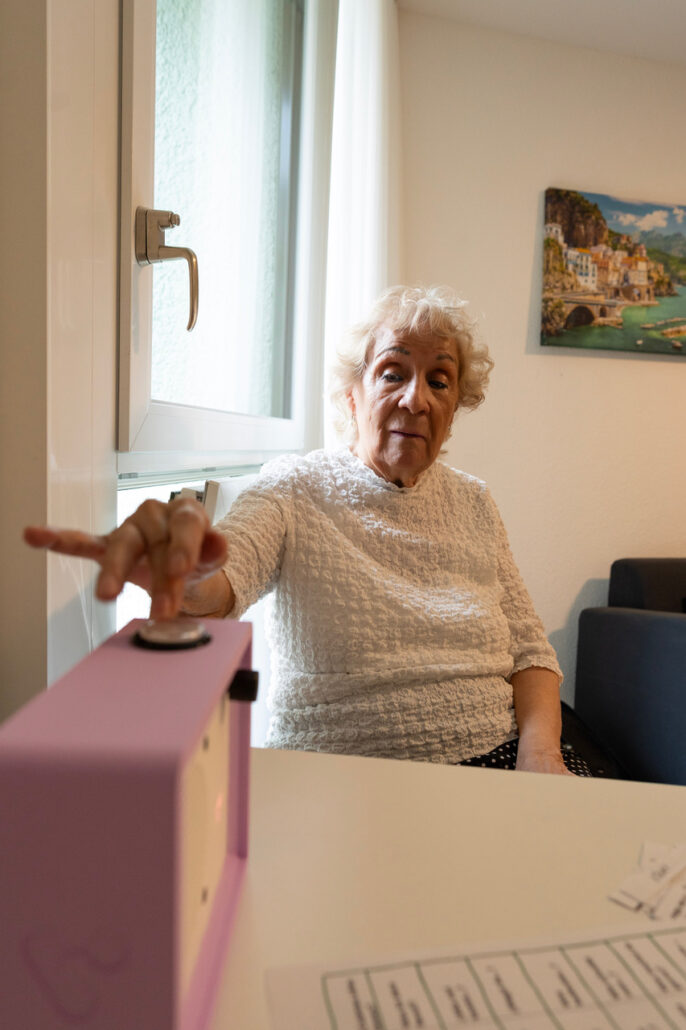

Since July 2026, seven Swiss care institutions have been testing the AI-supported reminiscence radio VRENI for the first time in the care of people with and without dementia. Initial feedback from the pilots shows what potential healthcare professionals see in it and which next steps are needed.
VRENI – why?
In communication and interaction, people living in residential and nursing homes should be met where they are: with their life history, their language and their interests. This applies to all residents. For people with cognitive impairments, especially dementia, there is an additional challenge. Restlessness and agitation are distressing, both for the person concerned and for healthcare professionals. To address these symptoms, medication is a typical treatment. However, antipsychotics carry risks for people with dementia (Mok et al. 2024). Accordingly, the NICE guideline advocates a non-pharmacological first-line approach, emphasizing psychosocial and environmental interventions, while recommending the use of antipsychotics only in cases of severe distress or when there is a significant risk of harm to the individual or others (NICE, 2018). Swiss professional societies likewise regard nursing and psychosocial interventions as the first choice (Savaskan et al. 2014).
At the same time, healthcare systems are undergoing substantial change. Around 166,300 people in Switzerland are currently living with dementia; by 2050, this figure is expected to reach around 287,800 (Alzheimer Schweiz 2026). Current projections assume that demand for places in residential and long-term care will rise by 43% by 2040. Demand will thus remain high or continue to grow (Pahud et al., 2025). Residential long-term care is therefore a central field of action in the healthcare system. In addition, the shortage of skilled staff calls for responses that encourage healthcare professionals to join and to stay, and that enable them to work efficiently and with good support.
Digital tools are one such solution. But how can digital tools help make the remaining time for personal attention count?
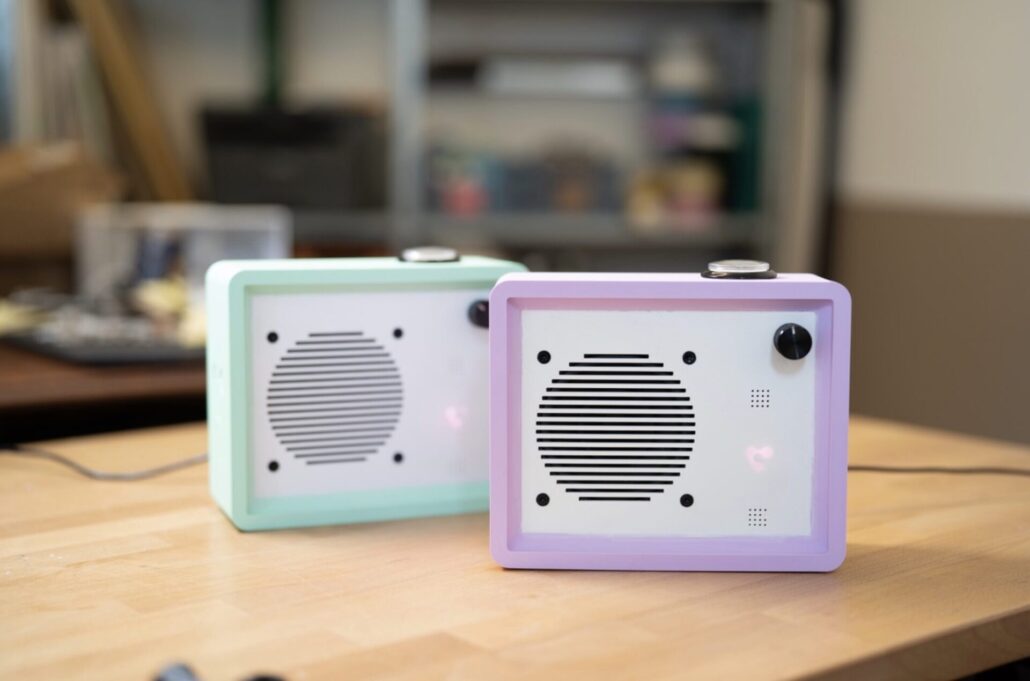
The AI-based reminiscence radio VRENI is conceived as one such tool, one that can provide valuable support for the time spent on interaction and communication. VRENI is designed as digital, biography-oriented support in the form of a screen-free radio for the care of older people in residential and nursing homes. It aims to address the problem that biographical knowledge about older people is often missing or barely used in everyday care. Yet this knowledge provides orientation, promotes well-being and supports person-centred care and communication. People with dementia or other cognitive impairments benefit in particular. In addition, VRENI uses AI to make life stories, music and language accessible to residents, healthcare professionals and relatives. The individual life story is particularly important. Knowing a person’s biography facilitates person-centred care. This is where VRENI comes in. It collects knowledge about rituals, former occupations and preferences that care staff can draw on specifically in interaction and communication.
Insights from initial pilots
VRENI is still in development. Initial pilots with healthcare professionals and residents indicate which gaps VRENI can close in everyday practice: biographical knowledge is usually recorded once but rarely updated. Those who know a person’s biography can tailor songs, stories or other activating sequences to it. For residents who do not wish to take part in group activities, VRENI offers a voice-based tool that enables conversation and activation on an individual basis. Linguistic diversity in everyday care adds a further dimension. Language barriers may hinder effective communication and relationship-building with residents whose first language is not spoken by the care team. This weighs all the more heavily because people with dementia often turn to the language they learned first (Paradis 2004). For VRENI, this could mean that healthcare professionals gain a tool that lets them offer more than just a smile, as they can also provide stories or songs in different languages. VRENI offers a voice-based approach, which is seen as an opportunity, for example for people who find conversations with others stressful or associated with shame.
Life history forms, memory boxes, singing groups and interactive table projectors are part of the offering in many residential and nursing homes. According to healthcare professionals, however, tailoring music to an individual remains time-consuming, from finding the songs to playing them at the right moment. Yet the positive effect of music is well documented. A recent Cochrane review demonstrates that music-based care reliably improves the mood of people with dementia, with initial promising indications for behavioural symptoms as well (van der Steen et al. 2025). The Swiss project Musikspiegel reports less restlessness, apathy and aggression as well as fewer depressive symptoms when the music matches a person’s biography (Zentrum für Gerontologie UZH, 2017–2021). Even in stressful care situations such as bathing, music shows the strongest evidence among the interventions studied (Konda et al. 2026).
This is the gap VRENI addresses. The reminiscence radio is intended to shorten the path from biography to person-centred interaction and communication. VRENI is meant to be a personalised resource for care, available at any time of day or night.
Conclusion and outlook
The need for digital support in care will continue to grow as more and more people share less care time per person. In this regard, the key question is how such digital tools can be used meaningfully. VRENI offers residents new access to stories, music and their first language. For healthcare professionals, VRENI can provide digital support for person-centred care and act as a facilitator in interaction and communication with residents. This initial feedback is continuously incorporated into the further development of VRENI. Systematic, scientifically supported studies are now needed to fully understand the potential and feasibility of VRENI for care and support in residential long-term care settings. Following its successful validation, VRENI can then be piloted and evaluated carefully and systematically, and the adoption model and implementation strategy can be developed and put into practice.
References
Alzheimer Schweiz (2026). Demenz in der Schweiz 2026. Zahlen und Fakten. https://www.alzheimer-schweiz.ch/de/ueber-demenz/beitrag/demenz-in-der-schweiz
Konda, V., Arora, T., Kontos, P. et al. (2026). Best Practices for the Design and Evaluation of Bathing Spaces for Older Adults With Cognitive Impairment in Residential Care Settings: A Scoping Review. Journal of the American Medical Directors Association, 27(1), 105971. https://doi.org/10.1016/j.jamda.2025.105971
Mok P L H, Carr M J, Guthrie B, Morales D R, Sheikh A, Elliott R A et al. Multiple adverse outcomes associated with antipsychotic use in people with dementia: population based matched cohort study BMJ 2024; 385 :e076268 doi:10.1136/bmj-2023-076268
NICE (2018). Dementia: assessment, management and support for people living with dementia and their carers (NG97). National Institute for Health and Care Excellence. https://www.nice.org.uk/guidance/ng97
Pahud O, Pellegrini S, Dorn M, Dutoit L, Zufferey J. Bedarf an Alters- und Langzeitpflege in der Schweiz Aktualisierung der Bedarfsprognosen bis 2040 mit Blick bis 2050. Neuchatel: Schweizerisches Gesundheitsobservatorium; 2025.
Paradis, M. (2004). A Neurolinguistic Theory of Bilingualism. Amsterdam: John Benjamins.
Savaskan, E. et al. (2014). Empfehlungen zur Diagnostik und Therapie der behavioralen und psychologischen Symptome der Demenz (BPSD). SGAP, SGPP, SNG, SFGG u. a. https://www.psychiatrie.ch/fileadmin/SGPP/user_upload/Fachleute/Empfehlungen/BE_Diagnostik_u._Therapie_BPDS_2014.pdf
van der Steen, J. T. et al. (2025). Music-based therapeutic interventions for people with dementia. Cochrane Database of Systematic Reviews, CD003477.pub5. https://doi.org/10.1002/14651858.CD003477.pub5
Zentrum für Gerontologie der Universität Zürich (2017–2021). Musikspiegel. Forschungsprojekt, Leitung Sandra Oppikofer. https://www.zfg.uzh.ch/de/forschung/forschungsprojekte/musik_alter/Musikspiegel.html

Jasmin Hauser is co-founder and COO of VRENI (Hauser & Hauser GmbH, Zurich), a spin-off of Zurich University of the Arts (ZHdK) that grew out of her bachelor’s thesis in Art Education. She leads the transdisciplinary co-design process with healthcare professionals and residents, from field research to product development, and supports the pilot institutions.
 Prof. Dr Friederike J.S. Thilo is Head of the ‘Digital Health’ innovation cluster at the aF&E Nursing department, BFH Health. Her research focuses on the design of human–machine interaction in patient care, with a particular emphasis on the nursing profession within an interprofessional context, digital transformation processes in healthcare, and professional development within Care@home care models.
 Contributions as RSS
 Comments as RSS
Leave a Reply
Want to join the discussion?Feel free to contribute!